Thursday, 3 July 2014

Halbe: Defending Berlin from the south

Halbe is a small crossroads village south of Berlin.  Between April 24 and May 1, 1945, a German force of approximately 210,000 under the command of General Busse opposed a well equipped army of 280,000 led by Russian General Ivan Konev.  The German force was made up of regular army units and conscripted men of the Volkssturm (people's militia).

The carnage was substantial on both sides.  Many of those killed are buried in Halbe and a nearby Soviet cemetery.  To this day, remains are still being recovered in the sandy soil and forests surrounding Halbe.  As the Russians advanced, the German forces  attempted several breakouts in order to surrender to the advancing American forces coming from the West.

For those wanting to see the village and German cemetery, it is a quick day trip from Berlin on regional rail.  Inquire at the Berlin Hauptbanholf ticket office for fares and directions to Halbe.  Once in Halbe, turn right and stay right until you see the military cemetery sign on the left side of the road.

The following are pictures taken at the German cemetery:


Off the train, go straight to corner, turn right and veer to the right.


Entry to Cemetery


Another memorial in the WW II section of the cemetery.


Both identified and unidentified remains


Group burial site


This completes the European sites that I have visited.  My final site switches to the Pacific Islands of Iwo Jima, Guam, Saipan, and Tinian visited in 2001.

Monday, 5 May 2014

Seelow Heights: Start of the assault on Berlin: April 16-19, 1945

The Soviet Army was like a coiled spring on the East side of the Oder River.  Early on the morning of April 16th, 1945, the Soviet artillery opened a massive  barrage on the German defensive line located on the Seelow Heights that overlooked the West side of the Oder RiverThe German commanders pulled their forces back from the front line knowing that the Soviets usually opened their assaults with massed artillery.  After the barrage, the German forces moved back to the line to meet the Russian infantry and tanks crossing the Oder River.  The Russians suffered significant losses in both men and tanks.  The soft river bottom land along the Oder stopped their progress on the first day.  Eventually, the much superior Russian forces broke thru the German defenses and had an open road to Berlin.  For those individuals desiring  a great deal more information, I highly recommend the book by Antony Beevor titled The Fall of Berlin 1945  published in 2002.

For those visiting Berlin,  it is easy to make a day trip to the village of Seelow.  Train RB26 leaves from the Lichtenberg Bhf on a regular basis.  The train stops at a station just outside of Seelow.  A regional bus meets all train arrivals and departures  and takes passengers to and from the Center of Seelow.  From there, it is a short walk to a Museum built by the Soviets to commemorate their victory.  This is a day trip worth taking.   Check current travel guides for accommodations  if a longer stay is desired.  The following are personal pictures taken during my visit:


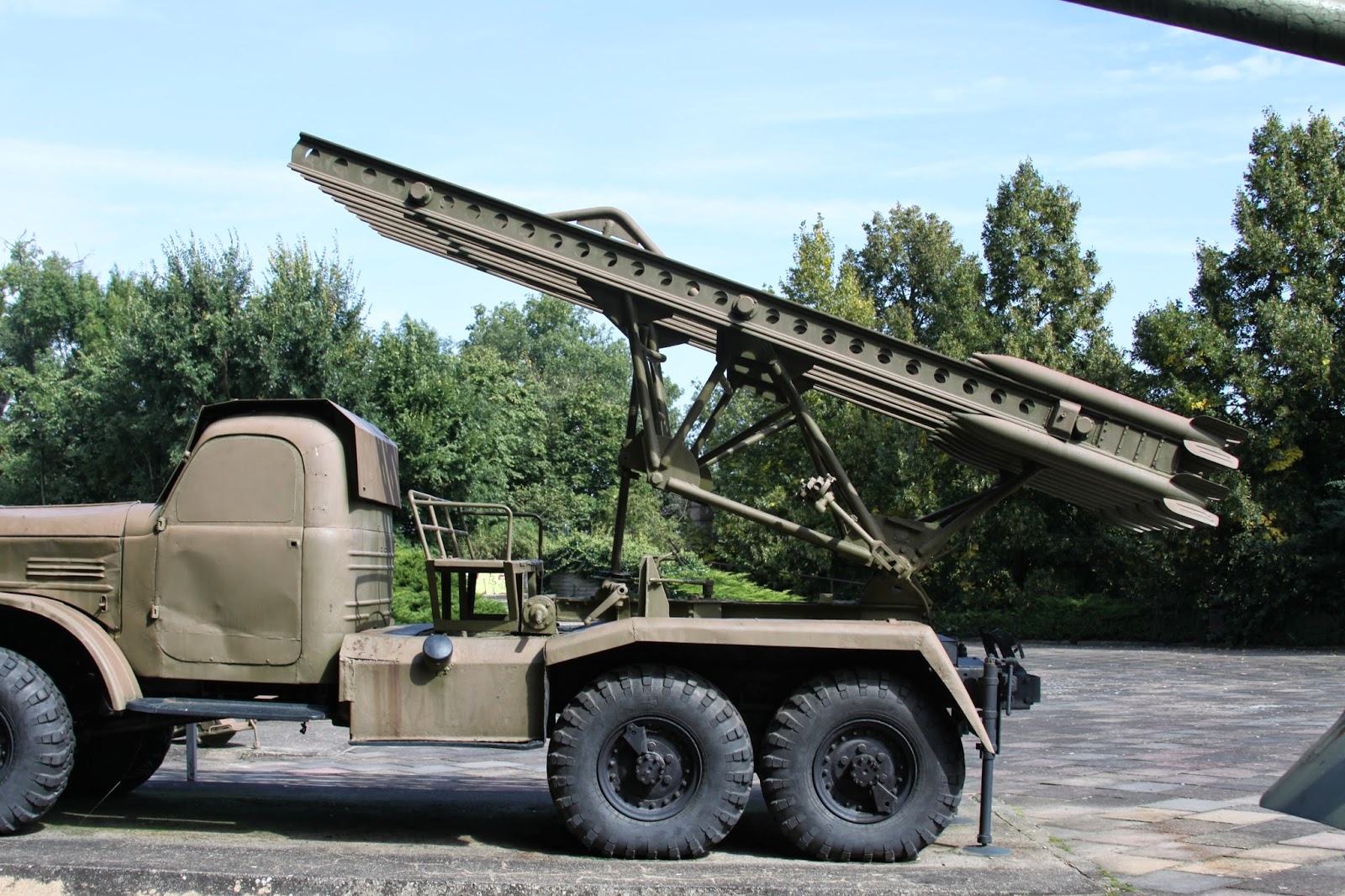
Katyusha Rocket Launcher


 T-34 Russian Tank

  Looking East from Seelow Heights to the Oder River

There is more to see at the museum including a cemetery holding the remains of Soviet Soldiers.  The personnel at the museum, upon request, can show a film in English.

Friday, 28 March 2014

2014: A Year of Anniverseries

The 70th anniversary of the Liberation of Paris is coming this August along with the D-Day Invasion.  2014 marks the 100th anniversary of the start of WWI.  You can be assured that tourism will increase in Northern France and Normandy.  This posting deals with the August 26,1994, celebration of the liberation of Paris (Paris libre) in 1944.

I held a prized invitation to sit in the grandstand erected in front of the Hotel de Ville (Paris City Hall) for the festivities.  For those wanting to know more, I refer you to a classic movie "Is Paris Burning" based on a book with the same name by Larry Collins and Dominique LaPierre.  The music score by Maurice Jarre is stirring and fantastic.

I am sharing three personal pictures of the event.

 
These veterans of General Philippe LeClerc's 2nd Armored Division surround and greet General LeClerc's widow.  Note the large projection screen to improve viewing by the  audience.


A small group of U.S. soldiers entering the venue.  U.S. Ambassador Pamela Harriman arrived soon after this picture was taken.


Entrance to Hotel Meurice on the Rue de Rivoli.  This hotel was used as the headquarters for the German commander of Paris, General Dietrich von Choltitz.  As most know, General Choltitz did not follow through on an order from Hitler to destroy the city.  The book mentioned in start of the blog will give you many more details.

Tuesday, 18 February 2014

Bayeux/Caen/Pegasus Bridge: British and Canadian Operations

Bayeux was the first town in France liberated by combined British and Commonwealth forces.  It is a major market center for this region of Normandy.  A major historical art piece known as the Bayeux Tapestry is located in it's own museum building.  The Tapestry depicts the Norman invasion of England by William the Conqueror and the victory at the Battle of Hastings in 1066.  It is worth the admission to see this piece.

Bayeux is also a site for a major British Cemetery located near the Battle of Normandy Museum.  Both sites can be visited on foot from the rail station in Bayeux or by car.  Check travel guides for accommodations and eating establishments.  Bayeux is a central location for touring  WW II sites in the area.

From Bayeux, take Rd. 516 to Arromanches-les-Bains to see the village and the remains of one of the two Mulberry Artificial Harbors towed from Great Britain to assist Allied Forces in off loading men, equipment, and supplies.  There is also a D-Day museum in Arromanches.  Take a short car ride on Rd. 514 to Quistreham.  From Quistreham, drive in the direction of Caen via Rd. 515.  You will come to the famous "Pegasus Bridge" that crosses the Caen Canal.  It was here that a glider force of soldiers from the British 6th Airborne Division surprised the German defenders and took control of the bridge.  The capture was critical so forces could move from the landing beaches to Caen.

Caen was significantly destroyed during the invasion.  The Caen Memorial is a must see for trekkers interested in peace and the costs of war.

Battle of Normandy Museum in Bayeux 


Remnants of Mulberry Harbor in Arromanches-les-Bains


                        My lovely travel companion.

Pegasus Bridge (not the Original)


Caen Memorial


My postings may be slower for awhile because I do tax work for a number of clients.  The tax season in the U.S. runs until April 15.  My next posting will cover the 1994 celebration of the liberation of Paris. 

Thursday, 30 January 2014

Back to Caen and Arromanches-Part 1

On the way back from Cherbourg in the direction of Bayeux and Caen, I recommend a stop at the German Cemetery at La Cambe.  Look for the sign on Route 13 directing you to the Cemetery.  There are 21,222 WW II German soldiers buried in the Cemetery.  When I visited the Cemetery several years ago, a unit of soldiers from the modern German Army was performing maintenance work for their fellow citizens.  I am including pictures of the cemetery for your consideration.


WW II saw significant casualties on both sides.  These soldiers also had parents, brothers, sisters, wives, and small children.

Thursday, 23 January 2014

Cherbourg: Destruction of the Port and U.S. capture of the Cotentin Peninsula

After visiting Ste. Mere Eglise, continue on Route 13 to the seaport city of Cherbourg.  Cherbourg sets on top of the Cotentin Peninsula.  German engineers knowing that U.S. troops were on they way to capture the port methodically destroyed port facilities and sunk ships to block the harbor.  On June 26, Fort du Roule fell allowing the capture of the city.  There is a great viewpoint for the city along with an interpretative center at Fort du Roule.

This is very personal to my wife whose uncle was a combat engineer working to clear the port and assist in rebuilding the rail system out of Cherbourg.  For a side trip, take Route 901 in the direction of Barfleur.  On the way, you pass the boyhood home of Alexis de Tocqueville who visited the U.S. as a political observer in the 19th century.  Barfleur has a number of seafood restaurants offering a variety of food.

Fort du Roule and Relics of War


Present View of Cherbourg


Wednesday, 22 January 2014

Ste. Mere Eglise

Ste. Mere Eglise is located only a few miles from Utah Beach.  Take Route 13 from Bayeux in the direction of CherbourgU.S. Airborne forces landed near and some troopers right on the village town square.  The picture shows the village church steeple with a reproduction of Trooper Joe Steele and his parachute snagged on the steeple.  This situation was re-enacted in the movie "The Longest Day" filmed in the 1960s.

There is an excellent airborne museum off the village square.  I recommend this stop for those interested in the D-day invasion.  There are several places to rest and have lunch.  The port of Cherbourg is only a short drive from here.

Village Church


Pictures of the Airborne Museum